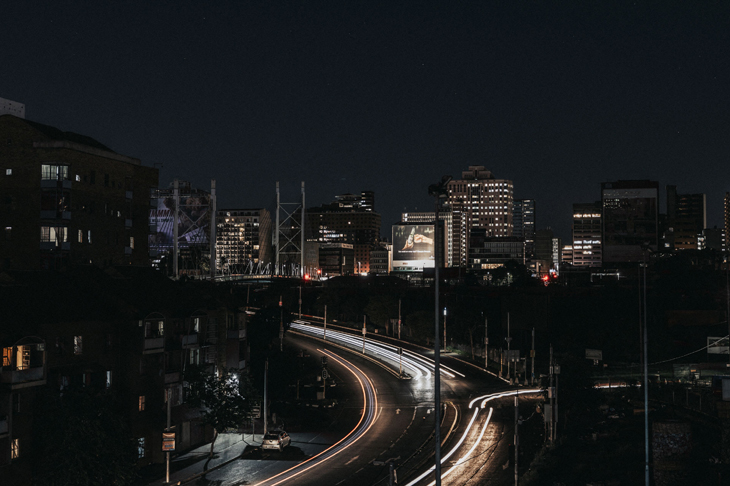
The budget in May and subsequent events indicate that Australian state and federal governments want to follow the lead of South Africa, where years of neglect of the power grid mean that its citizens are now enduring blackouts of up to ten hours a day.
Although the Australian experience is unlikely to be as bad as that of South Africa, where there have been reports of corruption and even of criminal gangs operating within the country’s power utility company Eskom, it may still be bad enough.
In South Africa’s case, the government of President Cyril Ramaphosa ignored years of warnings that demand for power was increasing, in part due to the electrification of the once notorious apartheid-era townships, while supply from the country’s aging fleet of coal-fired power stations was decreasing.
Although the country’s crisis (one of several past and present) has been attributed to an increase in renewable energy, the country has few renewable energy generators. Instead, bizarrely, the government has curried favour with Western activists and governments by portraying the decay in the coal grid as a reduction in emissions. One unintentionally hilarious Reuters story headline in mid-May was ‘South Africa beats climate goals as blackouts slash emissions’. Never mind the misery and economic damage caused by endless blackouts, look at the emissions saved.
No one is accusing the grid authorities in Australia of being corrupt and the problem of criminal gangs sabotaging generators is unknown here, but after carefully examining the problem of coal plants falling out of commission on the east coast, including the two-gigawatt Liddell power plant decommissioned in April, the various governments involved in managing that grid have set about making things worse. Along the way they intend to create more jobs for activists who will perhaps help reassure voters that sitting in the dark is good for the planet.
As previously noted in this publication (‘Dark ages coming’,18 February) a combination of state governments and activists have engineered the closure of much of the east coast generating capacity by the middle of next decade. These same parties insist that renewable energy will take the place of coal power, although no one has done this for a mainly coal-powered grid. If Australia succeeds it will be the first developed nation grid to switch from fossil fuels to wind and solar.
A glance at a data dashboard run by the National Energy Market Operator for the National Energy Market (the east coast grid) shows that there is still some way to go. For the twelve months to mid-May about 12 per cent of the NEM’s power came from wind and another 7 per cent from solar. Another 10 per cent came from hydro, which counts as a renewable.
Ignoring, for a moment, the distressing tendency of renewable power to go absent without leave at crucial times, the NEM would then seem to require perhaps four times the existing generator capacity for business as usual, or five times capacity to allow for spare generation to recharge the likes of pumped-hydro facilities. This is assuming, amongst other things, that sufficient storage will be built.
The problem is that the state and federal governments are still relying on private investors to build most of the wind generators and solar plants required and investment in the area is going through a bad patch. Renewable energy advocates can always point to this or that project which looks impressive on paper, but collectively they don’t seem to add up to much. A count of projects actually completed compiled by the Clean Energy Council shows that seventeen started generating in 2022, representing 1,248 MW of installed capacity, but just two projects amounting to 442 MW were completed in the first quarter of 2023. Those figures compare badly with the many gigawatts worth of coal power that will be decommissioned in the next decade or so, and the comparison is even worse when the average output of wind and solar generators is taken into account. For wind generators this is typically about one-third of the installed capacity.
To take one example, the 180-turbine $2 billion Herries Range wind farm announced by the Spanish renewables giant Acciona Energia in December to be built west of Brisbane is expected to be one of the largest onshore wind projects in the world. However, the plated capacity of 1,000 megawatt amounts to an average output of just 330 MW, or about the same as a gas plant designed to power up and down quickly to fill in supply gaps, except that the gas plant would have vastly greater value. It can be switched on and off on demand, while the wind farm’s output depends on the vagaries of the weather.
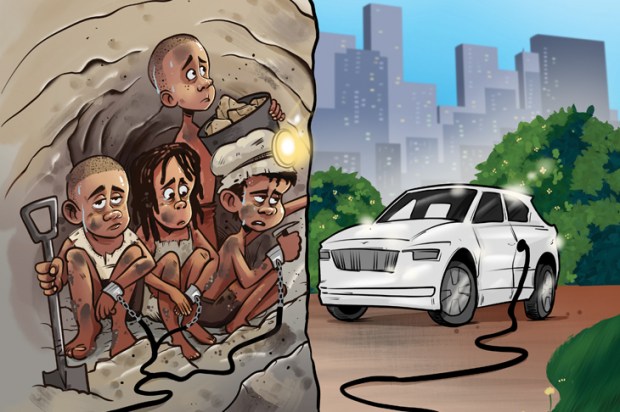
Instead of working out just how the grid will cope with the expected huge fluctuations in supply from wind- and solar-dependent generators or even acknowledging that supply might be an issue, politicians and their activist thralls have been busy trying to increase demand. The federal government is reported to be finalising emissions standards for cars which are expected to greatly favour electric vehicles. There is considerable debate at all levels about just how to increase the sale of EVs, which now account for about 8 per cent of the market. The NSW government, to take one example, has a strategy for increasing the market share of EVs in the state to more than 50 per cent by the end of the decade.
Well over one million cars are sold in Australia every year. Where is the electricity to power more than half a million new cars every year to come from?
Then there is the general push for electrification of homes, which means replacing gas hot water systems, gas stoves and heaters with electrical appliances. The federal government has set aside $1.3 billion for a still ill-defined electrification program which includes low-cost loans for installing electric appliances, improving insulation and putting yet more solar panels on roofs. Again the issue of the extra power needed to supply this switch to electrical appliances, especially at night when the solar panels are not working, does not seem to be worth mentioning.
Instead the federal government has lashed out with another $1 billion for hydrogen fantasies and will create more jobs for activists in the National Net Zero Authority. This body is supposed to ease the transition from fossil fuel power to the supposed utopia of clean, green energy. But its main function may be to reassure voters left without power for increasing long periods, as is now happening in South Africa, that really it’s good for the environment.
Got something to add? Join the discussion and comment below.
Dark Ages – the destruction of Australia’s power grid, by Mark Lawson, is published by Connor Court. www.clearvadersname.com
You might disagree with half of it, but you’ll enjoy reading all of it. Try your first month for free, then just $2 a week for the remainder of your first year.