Long before the former Woke gods in Twitter management were pushed off their pedestals by Elon Musk, the general public suspected their speech was being heavily censored – not only by pink-haired activists – but upon the request of politicians.
We saw glimpses of this through the treatment of former MP Craig Kelly, when members of the Labor Party asked social media platforms such as Facebook to remove his ‘dangerous’ content.
‘We are in the middle of a pandemic, we know he is a repeat offender, yet you’re doing nothing to stop him amplifying content,’ complained one Labor MP. ‘We certainly are doing everything in our power to stop him and every other person who might promulgate misinformation relating to Covid or other on our platforms,’ replied the director of Australian government affairs and public policy at Google.
It did not matter that Kelly was ultimately correct, because social media sources its definition of #Truth as a divine revelation from the World Health Organisation. This is unquestionable right up until a correction is issued and then that becomes The Word.
It was the ‘safe and effective’ narrative that ended up being revealed as a fake news sham – the extent of which we are years away from understanding. Kelly was one of the first political figures in Australia to learn that being correct does not protect you from censorship. If anything, the more right you are the worse it gets.
This week, Elon Musk embarrassed the Australian government by revealing the petty nature of these censorial demands.
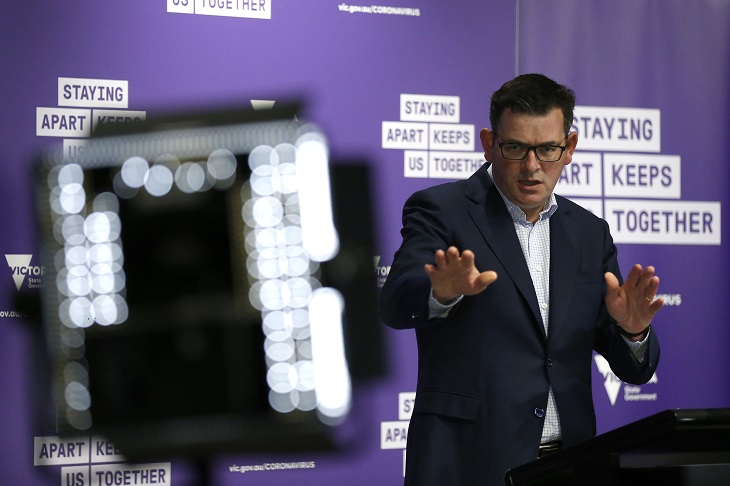
We knew it was bad – but this is bad. In one instance, Twitter was asked to remove a tweet that mocked the Labor Premier in Victoria.
‘Dan Andrews is a d*ck!’ was considered to be ‘potentially harmful’.
And in China, likening Xi Jinping to Winne the Pooh is a jailable offence … for the same reason.
Another post Twitter was asked to remove contained a meme of Daniel Andrews wearing a mask with the caption: ‘This Mask is as Useless as Me.’
So dangerous. So serious.
‘Not only clowns, but the entire circus!’ (This, from someone watching people wait for hours in line for a PCR test.) That had to go as well.
The Australian called these requests ‘the public health SOS from Canberra to Twitter HQ’.
One is tempted to ask how fragile the Covid narrative was if these humorous posts were deemed threatening enough to warrant removal. Fears that dissent would ‘undermine confidence in the vaccine program’ were wrong. The failure of the vaccine and a rising trend nick-named ‘died suddenly’ did that without the need for dangerous memes.
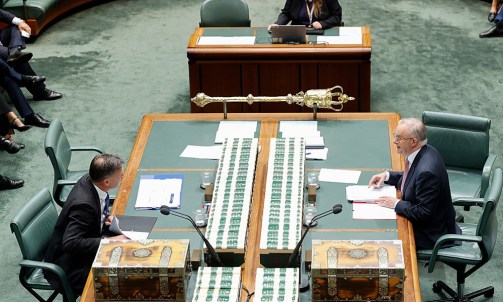
Is this sort of censorship the government means when it says ‘ensuring online safety’? Do our politicians want verbal safety from the criticism of the masses? When politicians argue for greater powers regarding the policing of online safety on the floor of Parliament, they pretend it’s about stopping crime and protecting children from the digital fiddlers. Maybe they just mean ‘fiddling with political feelings’. It’s one of those ‘read the fine print carefully’ packages.
This matters because Australian political parties spend millions on social media advertising during election campaigns. Allowing them to snuff out memes and posts that criticise the mistakes of their party seems incongruous with the process of free and fair elections. Who decides what is dangerous and what is fair criticism? The ruling party?
In this case, the Twitter documents detail an extensive range of requests. They weren’t only mad at the humour. One post that suggested the former Federal Health Minister Greg Hunt used ‘emotionally manipulative language’ made it to the list.
To his credit (or perhaps regret), Hunt said in an early interview:
‘The world is engaged in the largest clinical trial, the largest global vaccination trial ever, and we will have enormous amounts of data.’
I guarantee if you put that on Twitter in the 2021-22 period, you’d have copped a swift ban for spreading dangerous misinformation.
The Department of Home Affairs allegedly tried to get 222 Twitter posts taken down, badgering Twitter’s office in San Francisco with 18 email requests. According to the Freedom of Information request secured by Liberal Senator Alex Antic, 4,213 posts were removed across social media following requests made by the ‘Extremism Insights and Communication’ branch within the Social Cohesion Unit of the Department of Home Affairs.
Why did the Department of Home Affairs make 4,213 requests to social media companies to censor COVID-related matters?
Who decides what is “mis information” or “dis information” in the bureaucracy/social media censorship industrial complex in Australia today?
Watch as I question… pic.twitter.com/9Lsx5Y5MN4
— Senator Alex Antic (@SenatorAntic) May 24, 2023
I personally warned that legislation designed to deal with acts of extremism and terror would be re-purposed to control speech and silence politically opposing views. This revelation should be enough to have the Extremism Insights and Communication sent to the shredder because it is not fit for purpose.
No wonder the former Prime Minister and State Premiers don’t want the public to read the contents of the National Cabinet meetings. If this is what they were prepared to do to protect the fragile feelings of politicians during one of the worst abuses of power in modern history, we can only guess at the content of their secret medical advice. Was it written on post-it notes? Ghost-authored by ChatGPT? Maybe it was sent via bat from the heart of Wuhan.
As Senator Antic rightly said:
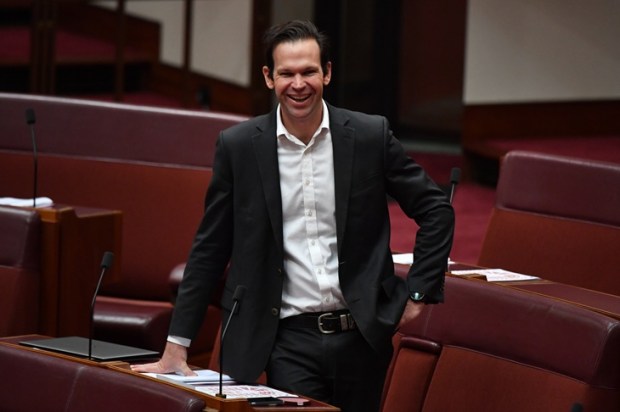
‘It is entirely unclear to me why the Department of Home Affairs, a department which is primarily charged with the duty of overseeing matters like border control, has been using a backdoor arrangement with social media companies to influence the media in relation into matters such as public health. On what basis is the department qualified to determine the truth associated with Covid related matters…? Are we seeing the Australian #Twitterfiles?’
The comments on The Australian, did not appear pleased at the revelation.
‘Tyranny will be voluntary before it is compulsory,’ said one. ‘Don’t know how they’re planning on getting people to believe them when the next pandemic or crisis comes along,’ said another.
It’s even worse than you think, with the Extremsim [sic] Insights and Communications branch failing to spellcheck its fact check department.
‘A group that can’t spellcheck seemed to become the “fact-checking” authority for an entire nation,’ said journalist Andrew Lowenthal.
Speaking with The Australian, in an article by Adam Creighton, Lowenthal added:
‘Jokes and information that later turned out to be true were frequently included in the Australian government’s censorship requests.’
These requests did not only come in the form of individual tweets, they included lists of people which, according to people at Twitter, sometimes included doctors.
Despite Senator Antic’s valiant efforts, it is unlikely our censorial government will face a single punishment for their behaviour. At least we know that ‘the power of memes’ is real… Elon, you don’t happen to have the keys to the National Cabinet archives tucked away somewhere?