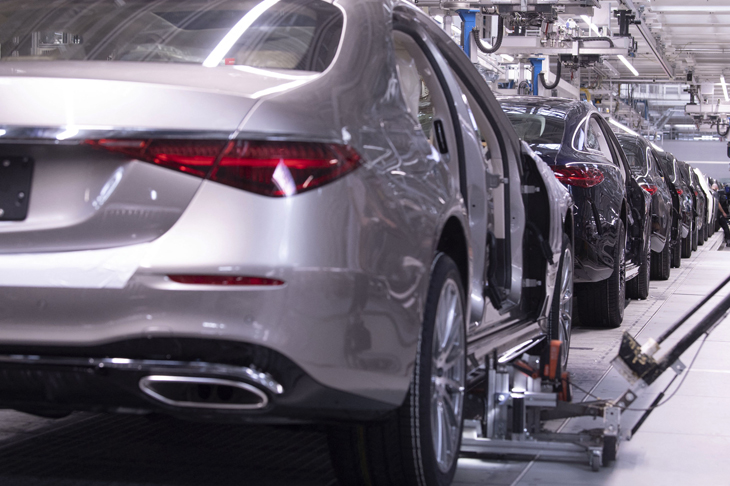
It’s not often that a development in north-western Tasmania looms large on the international stage. But a site near Burnie is set to be a key part of Germany’s resistance to Green pressure to abandon internal combustion engine (ICE) vehicles in favour of electric cars. Porsche is the driving force behind the A$1 billion investment in the HIF (Highly Innovative Fuels) plant now in development – one of three such e-fuel plants globally – as part of a move to mass production by 2026. E-fuel, not yet commercially available, is a combination of hydrogen with carbon dioxide captured from the atmosphere which ICE vehicles can run on. While the use of e-fuel produces carbon emissions, these are offset according to producers by the CO2 sucked from the atmosphere to make the fuel. Germany’s car producers are touting ICE vehicles using e-fuel – with the price eventually expected to be around A$2 a litre – as an alternative to battery-powered cars.
Germany’s insistence that ICE vehicles can and must remain into the future has shown that even for its Green-Left government, economics can eventually trump environmental political correctness. The country remains by far Europe’s largest car producer and is the world’s largest car exporter by value, employing 800,000, 5 per cent of the workforce. Car production has in large part powered Germany’s modern economy and more than a little Teutonic pride is inspired by the fact that one of their own, Karl Benz, pioneered the first reliable petrol engine and commercial production of ICE vehicles. Torpedoing the EU plan to ban the sale of new ICE vehicles will allow car producers to continue using their existing products and infrastructure.
Germany’s position has thrown a spanner in the works of what the EU had proclaimed as a landmark step in its climate change activism. Chancellor Olaf Scholz’s government last year signed off on an EU commitment for all new vehicles sold from 2035 to have zero emissions. In February the European parliament, including representives of Germany’s coalition parties, passed legislation to that effect. To be confirmed as EU law, the measure needs to be approved by the European Council, the EU member-state leaders. But at the eleventh hour, the one non-Green-Left element in Germany’s ruling coalition, the pro-business Free Democrats (FDP), began echoing through its Porsche-driving transport minister, Volker Wissing, fierce objections of the country’s car producers to an all-electric vehicle future. The FDP has long been a strong backer of the car industry, including through its resistance to efforts by the other main parties to end Germany’s status as Europe’s only country without a general motorway speed limit. Despite objections from the Greens, Scholz has backed the FDP’s objections to the EU’s planned 2035 law.
The opponents of Germany’s sudden insurgency have angrily insisted that the European parliament’s law means that from 2035 the only new vehicles which can be sold are those that produce zero carbon emissions when driven – i.e. not ICE vehicles using e-fuel. Europe’s Green-Left, backed by car producers such as Volvo that are switching to all-electric production, also object that not phasing out ICE vehicles would slow the transition they want to electric vehicles. The Guardian has accused Scholz of pandering to the populist Right.
Berlin has had significant support from other EU member states. Italy, whose car industry is as important to its economy as Germany’s, is a strong ally. Deputy Prime Minister Matteo Salvini has called the EU’s 2035 plan ‘suicide’. Most of the EU’s eastern members, whose strong recent growth has been significantly driven by car production, have also backed Germany.
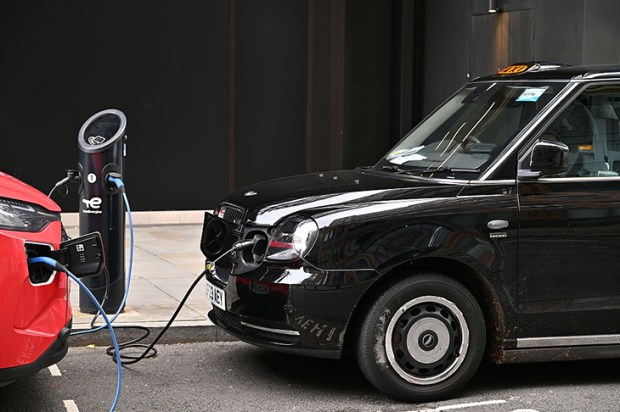
The Berlin-led backlash is fueled by continued widespread scepticism about electric cars. Despite the sharp increase in petrol prices over the past year, electric cars still represented only 12 per cent of the EU’s nine million new vehicle sales in 2022. Concerns about their expense and whether there’s enough lithium and cobalt to sustain their continued production combine with stubborn concerns about their range, the availability and reliability of the recharging network and endless negative stories such as drivers facing the choice of reaching their destination or having the heating or windscreen wipers on.
After initially fierce French resistance to German demands suddenly evaporated, the EU establishment capitulated, although the FDP had to accept the compromise that post-2035 ICE vehicles be fitted with technology which prevents them from starting if fueled with petrol or diesel. Nevertheless, the EU looks likely to confirm the significant retreat from its original plan. Greenpeace has sharply criticised what it calls a ‘rotten compromise’.
The EU retreat will have a big impact internationally. For example Boris Johnson brought forward a ban on the sale of new non-zero-emissions vehicles from 2040 to 2030. ‘Conservative’ Britain will now ponder the fact that it’s brought on itself a fundamentalist commitment to electric cars five years before its European neighbours adopt much more flexible rules. Europe’s shift should also prompt a rethink in Australia where it’s widely assumed ICE vehicles are on the way out.
The normally placid Netherlands has also been experiencing a backlash against Green policies which threaten livelihoods. The European Commission has directed that Dutch nitrogen emissions must be halved by 2030 to meet climate change targets.
Mark Rutte, the Dutch Prime Minister since 2010, likes to present himself as a common sense conservative but is the Davos Man EU-enthusiast from central casting. In response to Brussels’s directives, he decided to reduce farm livestock by a third by compulsorily acquiring hundreds of farms to then close them down. These measures have gone down like a lead balloon, as shown in the 15 March upper house elections, where a new protest party, previously unrepresented in parliament, the Farmer-Citizens Movement (BBB), was propelled into becoming the largest party in the 75-seat upper house, with up to 17 seats. With Rutte’s coalition parties reduced from 32 to 24, the BBB may be able to form alliances with other parties to stall or derail the government’s obsessive Green agenda.
Until recently Europe’s net-zero lobby has had a fairly easy ride persuading its citizens to accept radical changes allegedly needed to save the planet. But as the costs to jobs and national economies become clearer, the pushback will become stronger.
Got something to add? Join the discussion and comment below.
Twitter @markhiggie1
You might disagree with half of it, but you’ll enjoy reading all of it. Try your first month for free, then just $2 a week for the remainder of your first year.