You have to hand it to the passenger motor vehicle industry – they are past masters at securing favours from governments. They have been doing it for decades – arguably it’s their core skill set.
When the US car companies got into trouble during the global financial crisis, the executives flew off to Washington in their private jets to plead with the Obama administration to be bailed out. Their request was granted.
Notwithstanding the fact that Volkswagen was involved in one of the largest corporate scandals ever – in relation to falsifying the emissions standards of their vehicles – the company remains a favourite of the German government as well as other governments around the world.
The reasons that the car industry holds sway with politicians are obvious. Most of us drive cars and car factories stand out and employ lots of people who are relatively well paid. There are both patriotic and masculinity aspects to cars – they need to be defended.
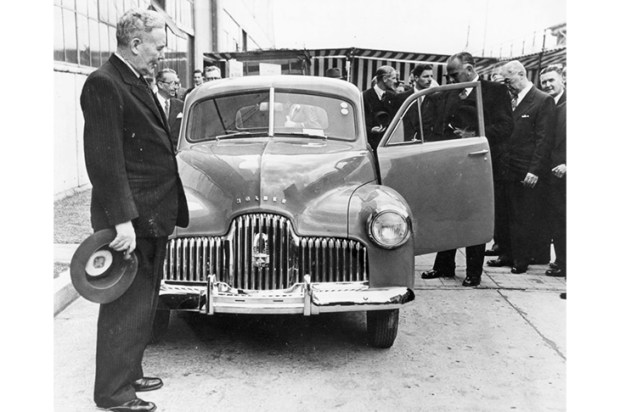
Car manufacturing in Australia lasted several decades in the context of extremely high rates of protection. Over time, the number of manufacturers shrank but at the end, the overseas-owned companies could not convince the federal government to continue to prop them up.
Australian consumers had paid dearly with high prices and a limited range of cars on offer. Some people might have loved their locally produced Holdens or Fords. But by dint of high tariffs and other measures (government-imposed quotas were favoured at one point), Australian drivers came off badly.
Just because we no longer produce cars here doesn’t mean that the multinational car companies have given up seeking to influence government policy to their benefit. And this is precisely what is happening with fuel emissions standards. Don’t think for a minute they are motivated by saving the planet; it’s all about ensuring that what is decided yields their company the best commercial result.
It’s why there is actually an all-mighty spat going on between the premium European car companies which are represented by the Electric Vehicle Council and the companies that supply the bulk of cars for income-constrained customers – Toyota and Mazda, in particular – which are represented by the Federal Chamber of Automotive Industries.
The European car companies are led by VW – there’s an irony there. Their aim is to kill off the push to hybrid vehicles, preferring instead for government policy to leapfrog the hybrid phase and head straight to fully electric vehicles, something which they specialise in. (Mind you, given that VW is essentially paid by the German government to produce fully electric vehicles, it’s hardly surprising that the company made the switch away from internal combustion engine vehicles.)
FCAI, by contrast, sees hybrids as being a popular and convenient stepping-stone to accommodate lower net emissions arising from car transport. (It accounts for around 10 per cent of our total emissions.) According to its modelling, fully electric vehicles will make up less than 20 per cent of new car sales in 2030, with a further quarter internal combustion and the remaining hybrids.
The preferred government modelling and one also favoured by the EVC is that over 90 per cent of new cars sales will be fully EV by 2030. (In their dreams, by the way.) The EVC is lobbying to make sure that only plug-in hybrids are counted in this percentage, thereby serving the interests of its members. (Most hybrids at this stage are not plug-in.)
Where do fuel emissions standards come into this argument? Before answering this question, it needs to be pointed out that Labor rejected changing these standards as part of its election manifesto. That’s right – any changes were explicitly ruled out. But this has not stopped Climate Change Minister, Chris Bowen, from effectively reneging on this pledge and opening the issue up for discussion. In other words, expect changes to fuel standards very soon. (Didn’t I warn you about Bowen (and Burke)?)
The push is on from the EVC to insist that Australia comply with European emissions standards – referred to as Euro 6 – which, incidentally will provide a massive commercial boost to its members. The shift is opposed by the FCAI. This standard puts a maximum of 95 grams of CO2 per kilometre driven by passenger motor vehicles. Most of Australia’s most popular current vehicles have emissions in excess of 200 grams per kilometre.
But here’s the important feature to note – the way these new emissions standards will work is that each manufacturer must comply with a Corporate Average Fuel Emissions figure. In this way, the manufacturers cross-subsidise the sales of their EVS while jacking up the price of popular cars on the Australian roads. This suits the premium European car manufacturers to a tee, but will hurt the average driver who requires an affordable vehicle combined with convenience.
When Bowen summarily rejected the idea that these new fuel emissions standards are the equivalent of a sector carbon tax, he was dead wrong. That’s what it is, that’s what its intention is.
There is another major complication to the insistence on Euro 6 in Australia and that is that our two remaining refineries are not in a position to comply at this point of time. There has been considerable progress with the sulphur issue and a solution is now likely by 2024. But the problem of aromatics has not been solved. Additions of ethanol would help but would also significantly add to the price of petrol, which wouldn’t be politically popular.
You might imagine the resulting closure of the refineries would weigh on Bowen’s thinking – on national security grounds, at the very least – but there is little doubt that some of his advisers and the bureaucrats will be telling him not to worry too much. Just think of the contribution to the reduction in our national emissions that their closure would involve!
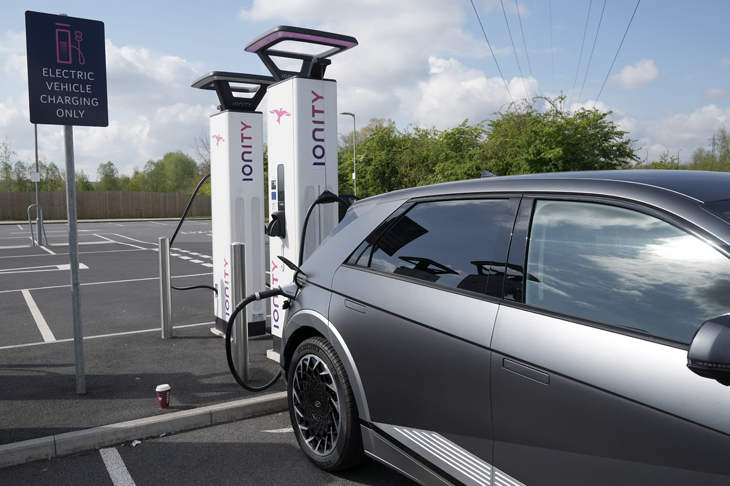
So where do consumer preferences fit into this policy about-face? The reality is that very many Australians, particularly those living in outer metropolitan and regional areas, are quite rightly attached to their powerful ICE cars and spending five minutes max to fill them up. The last thing they want is to pay top dollar for an EV and wait hours to charge it up, having driven around to find an available charger.
But consumer preferences won’t count for much when Bowen thinks he is saving the planet but is actually being conned by lobbyists. More sighing.
Got something to add? Join the discussion and comment below.
You might disagree with half of it, but you’ll enjoy reading all of it. Try your first month for free, then just $2 a week for the remainder of your first year.