Is it election interference if social media oligarchs in charge of the de facto public forum admit to manipulating algorithms, erasing commentators, suppressing information related to political candidates, and removing news stories critical to the character of a soon-to-be elected President?
What about if those same companies banned a sitting President, effectively silencing democracy?
And what is the public supposed to think if some of these behaviours are not merely the whim of politically interested corporations, but also a not-so-subtle direction from the FBI? That would be the same FBI that went all-in on the Russia Collusion fake news story that endured without ‘fact-checking’ or social media ‘community safety warnings’.
Certainly, if legacy media publications admitted to burying politically sensitive news at the height of an election to benefit their preferred political candidate, there would be hell to pay.
Forget the red panic about ‘foreign interference’, domestic digital witchcraft is a far greater threat to the safety of democracy.
This is an international problem, as these corporations have the ability to meddle in the global conversation above and beyond any protections individual countries have regarding election conduct.
Facebook removed sitting MP Craig Kelly at the last federal election for daring to contradict the ‘approved’ narrative on vaccines – an open and highly contested topic that played a significant role in the forum of public opinion. Imagine the outrage if Greta Thunberg was removed for spreading misinformation about the (non-existent) climate apocalypse. After all, is there not an argument to be made that ‘real harm’ is being done to children traumatised by fear of the end times?
‘Harm’ and ‘misinformation’ are increasingly a matter of political opinion and yet they are being defined by faceless fact-checkers who never correct their falsities.
The removal of President Trump served as the final proof that social media companies hold too much unchecked power over democracy. The problem has only worsened in the years since.
And no, there is no point claiming that these ‘bans’ are about ‘public safety’, given actual terrorist regimes hold verified accounts.
Anger over political censorship reached fever pitch during the Hunter Biden laptop saga. Public suspicion that the breaking story about the soon-to-be President’s son has become a confirmed fact. The laptop is real and so is its contents. Like it or not, the conspiracy theorists were right.
The FBI did lean on social media companies to hush up what it perceived – without evidence – to be ‘Russian influence’ and ‘disinformation’ – resulting in those companies actively manipulating a crucial news story wrongly believing it to be ‘dodgy’.
This is a clear-cut example of social media platforms deciding, as editors, what is and isn’t news. Worse, these are not editors cautioning their writers, what we saw was a bunch of technocrats editing the public conversation.
In doing so, social media giants may have changed the course of the presidency.
For those who say that ‘Twitter and Facebook aren’t real life’, it is worth noting that they have real power combined with a political preference that leans distinctly to the Left.
Certainly, social media companies are favourable to the Democrats, as evidenced by the donation behaviour of their employees and CEOs. It is also reflected in the editorial direction of their ‘community guidelines’ which treat active ideological debates as a fait accompli, outright banning certain political objections. This, in and of itself, is political interference.
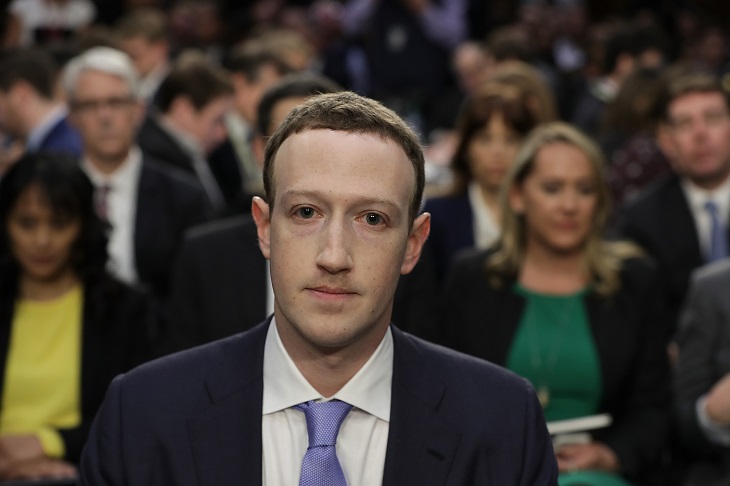
Late last week, Mark Zuckerberg was interviewed by Joe Rogan on his show The Joe Rogan Experience, during which Zuckerberg effectively admitted that the FBI had asked his platform to suppress the Hunter Biden laptop story, or at the very least, stories in general.
At the time, competitor Twitter caused public outrage by banning the New York Post after they posted a tweet, and then deleted or suspended the accounts of those who tried share or discuss the story – an act that Zuckerberg says was ‘wrong’.
No kidding.
Zuckerberg’s Facebook did not institute an outright ban as Twitter did, but Facebook engaged in subversion and suppression of the laptop story at a critical point during the election campaign. There is very little ethical difference between the two.
As Zuckerberg said:
‘So, we took a different path than Twitter. I mean, basically the background here is the FBI. I think basically came to us – some folks on our team. [They were] like, hey, just so you know, like you should be on high alert. There was, we thought there was a lot of Russian propaganda in the 2016 election, we have it on notice that basically there’s about to be some kind of dump that’s similar to that. So just be vigilant.
‘So our protocol is different from Twitter’s. What Twitter did is they said you can’t share this at all, we didn’t do that.
‘What we do is have if something is reported to us as potentially misinformation important misinformation, we also visited a third-party fact-checking program because we don’t want to be deciding what’s true and false and for the, I think was five or seven days, when it was basically being determined whether it was false.
‘The distribution on Facebook was decreased, but people are still allowed to share it so you can still share it. You could still consume it, to say the distribution is decreased. It got shared. It basically … the ranking and Newsfeed was a little bit less, so fewer people saw it than would have otherwise.’
‘By what percentage?’ asked Joe Rogan.
‘I don’t know off the top of my head, but it’s meaningful. But I mean, but basically, a lot of people are still able to share it. We got a lot of complaints that this was the case. You know, obviously this is a hyper political issue. So, depending on what side of the political spectrum, you either think we didn’t censor it enough or censored it all the way too much, but we weren’t sort of as black and white about it as Twitter.
‘We just kind of thought, hey, look if the FBI, which is still viewed as a legitimate institution in this country… It’s a very professional law enforcement. They came to us and tell us that we need to be on guard about something, that I want to take seriously.’
Rogan sought to clarify, ‘Did they specifically ask you to be on guard about that story?’
‘I know – I don’t remember if it was that specifically, but it was it basically, it fit the pattern when something like that turns out to be.’
Zuckerberg says that he didn’t want to be picking and choosing what ‘is and isn’t news’ – but that is exactly what Facebook did. If Facebook was true to its word, it wouldn’t seek the opinion of ‘fact-checkers’ and it would tell the FBI to bring evidence of a crime before it considered removing or suppressing content. Facebook might have even done the minimum due diligence and told its customers that it had been asked to suppress the story.
Instead, social media has become a tangle of whispers orchestrated by law enforcement, digital billionaires, and political interests directed public through in the direction of ‘approved truth’.