Thanks to the refusal of Australian weather to stick to the IPCC script, Sydneysiders have just experienced one of the coldest spring starts many of us can remember. This wouldn’t have pleased climate change alarmists – or the many households struggling to pay their electricity bills thanks to our governments’ craven acquiescence to Paris diktats. But it made life harder still for Sydney’s homeless. Even without anthropogenic augmentation, you’d think an extended winter wouldn’t be a particularly daunting prospect for the doorway dwellers of a subtropical metropolis. And with so many mortgage- and rent-paying Australians battling much more devastating weather-related problems in the bush, you can’t blame politicians for not prioritising the plight of a marginalised urban minority on the rare occasions when the mercury dips below body temperature. But in Southern California, generally a good bit warmer than NSW, authorities feel even less obliged to address the needs of the homeless. With the result that more people die of hypothermia on the palm–fringed nature strips of Los Angeles each year than on the snow-ploughed sidewalks of Manhattan.
Before Frau Merkel bulldozed Europe’s borders, homelessness was a manageable issue in welfare-state Britain. And before Mrs Thatcher introduced the poll tax, even overpriced, overcrowded London made reasonable provision for its homeless population. It was a cause of some concern, then, when, halfway through one 1960s cold snap, quite a lot of them suddenly started dying. It turned out that what was killing them was not the cruelty of climate but the kindness of strangers. Specifically, a group of young women who’d been driving round the city’s favourite homeless haunts each night dispensing home-made soup. What they didn’t know was that many habitual rough sleepers survive sub-zero temperatures with a form of short-term hibernation, where their pulse slows by as much as 60 per cent and they sleep for days at a time. And that waking them from this state of cryogenic suspension by pouring mugs of piping hot minestrone down their throats can trigger coronaries.
Doing the wrong thing for the right reason was a defining theme of the 60s, the first decade when the opinions of very young people were taken seriously. Many of the causes they embraced were irrefutably good ones; racial equality, the decriminalisation of homosexuality and the emancipation of women being obvious examples. But as your guru would have told you back then, every yin has its yang, and some of the freedom and tolerance which baby-boomers marched for manifested itself with less beneficial outcomes. The ludicrous respect still paid to charlatan art movements like abstract expressionism can be sheeted directly back to progressive liberal education methods of the 1960s, when schoolteachers suddenly began letting students eschew the acquisition of traditional skills in favour of simply ‘expressing themselves.’ The same well-intentioned shift away from the discipline of learning to being ‘creative’ initiated a trend which in recent years has seen Australian school leavers drop from 6th to 16th in OECD literary and numeracy rankings and explains why we now have to import doctors. And while the outcome of the 1967 referendum was undoubtedly a very good thing and long overdue, the policies of aboriginal self-determination which came in its wake have helped to perpetuate the worst kinds of inequality, deprivation and abuse in remote communities.
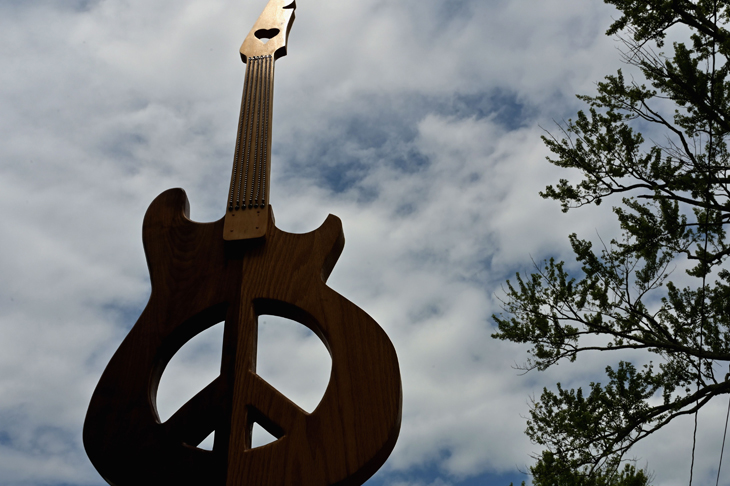
Woodstock, which epitomised the altruistic spirit of the 1960s, celebrated its 50th anniversary recently, with networks showing grainy footage of long-haired teenagers hugging each other in muddy fields. The song which mother-of-all hippies Joni Mitchell wrote about that festival gave those teenagers a clear brief. ‘We are stardust, we are golden. And we’ve got to get ourselves back to the garden.’ But most of them didn’t get back to anything except school and college. And forty years later, after cutting their hair, taking out mortgages and enrolling their own kids in private schools and universities, those same peaceful, tolerant, unmaterialistic American teenagers gave us the GFC.
Got something to add? Join the discussion and comment below.
You might disagree with half of it, but you’ll enjoy reading all of it. Try your first month for free, then just $2 a week for the remainder of your first year.