Thanks to the increasingly infantile appetite of cinema audiences and the laziness of modern screenwriters, two distinct but related film genres have emerged in recent decades. The more commercially successful of these is the adaptation of 1950s comic books, where the absence of original plots and compelling characterisation is mitigated by the pairing of overpriced actors with increasingly affordable computer-generated special effects. When Warner Brothers resurrected Superman for the big screen in the late 1970s, pundits considered it a bit of a punt as far as adult audiences were concerned. But it turned out that as well as still dressing and eating like children many American adults still wanted to watch like children, and pretty soon Batman and Spiderman were exhumed to similar public acclaim. Four decades later, Hollywood is still sucking at the superhero teat, and with each generation of cinemagoers more easily pleased than the last – a phenomenon by no means confined to the US – this will no doubt continue for some time. But for grown-ups like me, who don’t mind a bit of escapism but stopped being impressed by the ability to leap over tall buildings around the same time we graduated to the front seat of the car, the prospect of sitting through Avengers Endgame or Captain Marvel (the two biggest-grossing films of 2019) is about as appealing as a colonoscopy. So, what the industry has given us instead is ‘What if’ movies. These are films about more or less plausible characters interacting with each other in a more or less plausible way but in the context of/response to an entirely implausible premise.
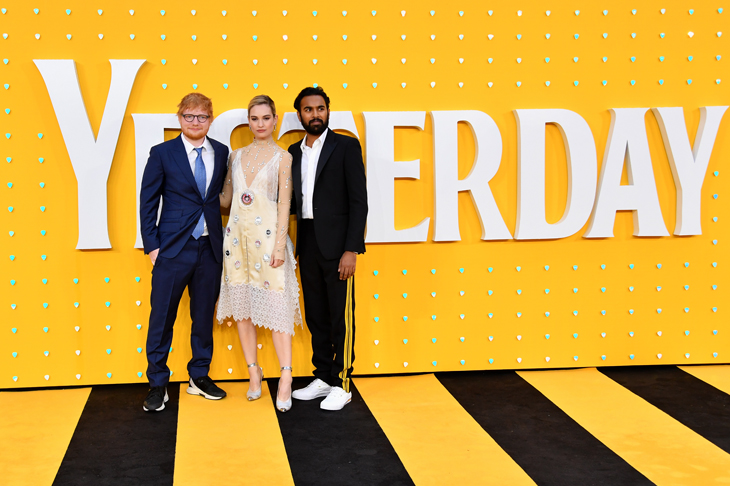
To some extent the success of ‘What if’ films depends on the outrageousness of this premise, and if they gave out Oscars for ‘Most Outrageous Premise’ Ricky Gervais’s spoilingly titled The Invention of Lying – the premise of which is ‘What if there was no such thing as dishonesty’ – might have won one. Which is more than you can say about the recent Danny Boyle and Richard Curtis film Yesterday, not least because its premise; ‘What if the entire Beatles oeuvre was erased from collective human memory?’, is itself predicated on the even less plausible assumption that most audiences would consider this a bigger deal than the erasure from collective human memory of, say, rationing, and also – if they are under thirty – that they even know who the Beatles were. The best ‘What if’ movie premise of all time is, of course, ‘What if someone lived the same day over and over again?’. But when I watched Groundhog Day recently, it occurred to me that the premise may actually not be as much of a stretch for modern audiences as it was in 1993. Indeed, the oft reprised scene of Bill Murray hearing the same thing on his hotel room clock radio each morning may strike 2019 audiences as depressingly familiar. There is a good chance, after all, that the first 30 seconds of news you hear or read tomorrow will be identical to what you heard or read this morning, ie that Democrats are furious about something Trump has tweeted, that Britain cannot agree on how to exit the EU, and that Rugby Australia refuses to back down on the sacking of Folau. Given the antipathy on both sides of the first two of these issues it seems likely that for their respective protagonists, at least, it will be groundhog day for some time to come.
But it amazes me that the Folau case appears so intractable, and that his comments about homosexuality caused so much trouble in the first place. What he said, after all, is either right or wrong. If it is right, and gay people who don’t stop having sex with each other really will go to hell when they die, they shouldn’t resent Izzy for bringing this to their attention, any more than smokers should resent a doctor for telling them that if they don’t stop smoking they will experience hell before they die. The reason gay people are angry is, surely, that they believe that it is simply wrong. So surely it would be a much better result from their point of view if, rather than stopping Izzy saying it, they should stop him thinking it, so that he won’t say it again. Which brings you to the reason why any attempt to stop people saying or writing even the most offensive things is a very bad idea: If a man can’t speak his mind, how can you possibly change it?
Got something to add? Join the discussion and comment below.
You might disagree with half of it, but you’ll enjoy reading all of it. Try your first month for free, then just $2 a week for the remainder of your first year.