When you’re told by a Harley Street specialist that you’re not, as you had feared, about to cark it, you tend to cast around for something vaguely life-affirming. So I am delighted when an old school friend asks me if I’d like to go to France for a few days ‘and do some painting’. I’m flattered that Mike remembers the modest artistic talent I displayed as a teenager, and consider buying a beret before we leave London. But my Monet-channeling fantasy is curtailed the morning after we arrive at his cottage, when he hands me a brush and a tin of sealant and points at the garden shed.
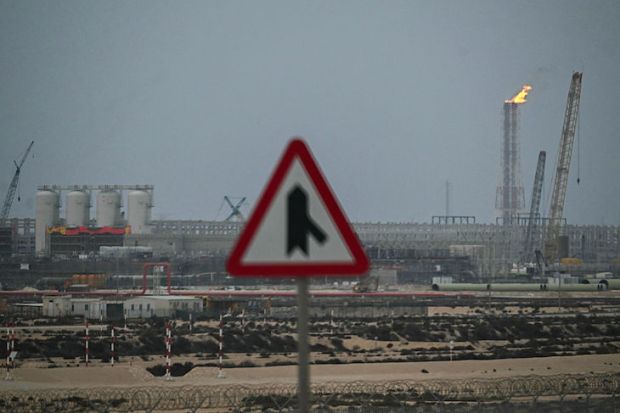
Governments don’t often provide official confirmation of unflattering national stereotypes, but in response to a dip in visitor numbers the French foreign minister has asked the country’s hotel and restaurant staff to be less rude to tourists. Presumably the idea is to revive the kind of warmth and bonhomie which made France such a stress-free posting for German troops during WW2. Mike is of the opinion that the current ‘welcome deficit’ is a largely Parisian phenomenon, but I am quietly confident we will be ignored and sneered at in rural Normandy. 70 years after VE Day the war is still an occupation for many in this corner of France, and nowhere more than in the picturesque market town of Sainte Mere-Eglise. The Airborne Forces Museum here is a must-tick box for any military historian, but the first thing I notice about the church in the main square is the parachute canopy snagged on its spire and the khaki-clad body dangling beneath it. Such, I learn, was the misfortune of Private John Steele of the 101st Airborne when he dropped out of the night sky in June 1944. While his comrades fought like lions in the cobbled streets below him Pte Steele bravely pretended to be dead until he was cut down and taken prisoner. In recognition of his somewhat passive contribution to the liberation of their country the population of Sainte Mere-Eglise decided to keep Pte Steele – or a mannequin representing him – in a state of perpetual suspension, and to launder his parachute and uniform on a regular basis. Odd chaps, the French. The road which skirts the rugged cliffs and pristine beaches of the Cotentin Peninsula reminds me of the Great Ocean Road. But rounding one spectacular headland Mike and I are confronted by something you won’t see anywhere in Australia. At first we assume this gigantic, gleaming edifice is a factory, but then the razor wire comes into focus and we wonder if it might be a prison. It turns out to be a brand new nuclear power station. France gets 75 per cent of its electricity from nuclear power and almost none from fossil fuels. Australia, by curious contrast, has no nuclear power stations, and no plans to build any, yet supplies more than half of the uranium France needs to boil a kettle. Since blowing up the Rainbow Warrior in Auckland Harbour the French have gone remarkably green. Environmentalists here are currently asking people to stop buying Nutella, for example, because one of the main ingredients of this ubiquitous tooth-rotting confection is palm oil, the production of which is disfiguring so much of South East Asia. I hope they succeed, but I suspect that asking the French to boycott Nutella is like asking us to boycott Vegemite. The last time Nutella was in the news here it was because a couple wanted to name their daughter after it, but the Government – quite rightly in my view – wouldn’t let them.
There are two staples of French life which you don’t see much of in Normandy. One of them is vineyards – cider and calvados being the traditional tipples of the region – and the other is Islam. France has the largest Muslim population of any European country, and after the news coverage of Charlie Hebdo I expected to see more burkas than baguettes here. But Mike assures me that the monoculturalism which made it so easy for the Nazis to round up French Jews during the occupation is still depressingly common. This explains why the fiercest political contest of recent times has not been left versus right but right versus righter; an almost literally incestuous struggle for control of the increasingly popular National Front party between its Vichy apologist founder and his more pragmatic and much sexier daughter.
On our last full day Mike indulges a long term ambition of mine to visit Mont St Michel, a medieval monastery built atop a rocky outcrop in a sea of estuarine mud. Over the centuries a small town has grown like barnacles on the rocks beneath the monastery, and the result is an impossibly romantic marriage of architecture and landscape which would not look out of place as a Disney backdrop. The cinematic effect intensifies when we park the car and set out along the boardwalk which winds the last two miles across the mud to the base of the mountain. I consider telling Mike I feel like Dorothy emerging from the forest on the Yellow Brick Road and seeing the Emerald City in the distance. Something tells me not to. Much of the romance evaporates when we enter the gates of the town and find ourselves surrounded by souvenir shops. But without the tourist trade Mont St Michel would have sunk into the mud a long time ago, and care has been taken to ensure that the history of the place is not overwhelmed. In one critical sense Mont St Michel has succeeded in maintaining a great French tradition. At the end of our tour we stop at a café for a well-earned beer, but when Mike tells the waitress that no, we won’t be ordering food, her radiant smile disappears like a salted scarlet slug and she tells us to leave. So they’ve still got it.
Got something to add? Join the discussion and comment below.
You might disagree with half of it, but you’ll enjoy reading all of it. Try your first month for free, then just $2 a week for the remainder of your first year.