The border protection debate is roaring again, and we’re happy to join the fun. One place to start is to highlight some key facts. In the last four months of the Labor government, there were 12,603 illegal maritime arrivals. In the first four months of the Coalition government, there were 1,581 illegal maritime arrivals. Or to look at it another way: during the exact same period the Coalition have been in power, there were 135 boats under Labor, and 29 under the Coalition. However you slice it, the figures are down by around a staggering 80 per cent. Still not convinced that things have only got better since 7 September? In January 2011, 271 people illegally arrived. In January 2012, it was 278. And in January last year, it was 419. This month, so far: none.
And yet our friends in the mainstream media and senior common rooms of all our great learned institutions are still piling all over the Immigration Minister. One of their favourite complaints is that complex political and social problems should not be reduced to a trite three-word phrase ‘stop the boats’. Yet after little more than a hundred days in office, it was with three simple words that Scott Morrison managed to change the debate in this country on the vexed issues of people smuggling, asylum seeking and illegal immigration. The Coalition’s Operation Sovereign Borders, he told the ABC this week, has been ‘very, very effective’.
Of course, politicians always try to avoid hubris or triumphalism when discussing the success of their efforts. After all, you never know what surprises lie just around the corner. The electorate, moreover, is always quick to mark down those with ‘tickets on themselves’, to quote a former federal Treasurer, Wayne Swan, who certainly knew all about underdelivering and overpromising (‘pink batts’, Grocery Watch, NBN, surpluses, alcopops, ETS, media regulation). So don’t expect the public popping of champagne corks or ticker-tape parades on the subject of ‘stopping the boats’.
Still, Mr Morrison’s three words represent an earthquake in terms of the politics of people smuggling. For the first time since John Howard and Philip Ruddock, the public have no reason to flay themselves over the semantics of towing back versus turning back, Manus versus Nauru, TPVs versus bridging visas, refugee swaps versus a larger immigration intake, Indonesian sovereignty versus our own, or even asylum seekers versus economic refugees. The question is far simpler: success or failure?
No doubt, more boats will arrive, lives will yet tragically be lost, and events will occur for the twitterati to agitate themselves over. But with so much attention focused on the diplomatic row with Indonesia, it’s easy to miss the big story for now: our elected representatives are protecting our borders, the people-smuggling business model is in crisis, and the Australian people’s faith in our immigration policy is being restored. Moreover, it is refreshing to see a major government policy being competently implemented and operating effectively. Very, very refreshing indeed.
Not a prayer
Greens Senator and self-declared ‘lapsed Catholic’ Richard di Natale, struggling as always to find anything of relevance to say, has called for the scrapping of the Lord’s Prayer at the opening of federal parliament. His argument is that a Judeo-Christian prayer is out of place in modern Australia.
Apparently, it distresses the good senator that during the reading of the prayer ‘there are a lot of people who are silent or who are thinking of other things.’ Surely they’re not actually contemplating how best they may serve the long-established moral and ethical values of the nation they represent? Heaven forbid.
‘We’re here to represent people of all faiths,’ the senator maintains. ‘People who don’t have a strong religious faith.’ Naturally, the irony of his words escapes him. Senator di Natale’s greatest fear may be that this ancient prayer is in direct conflict with his own religion: the fundamentalist worshipping of Gaia.
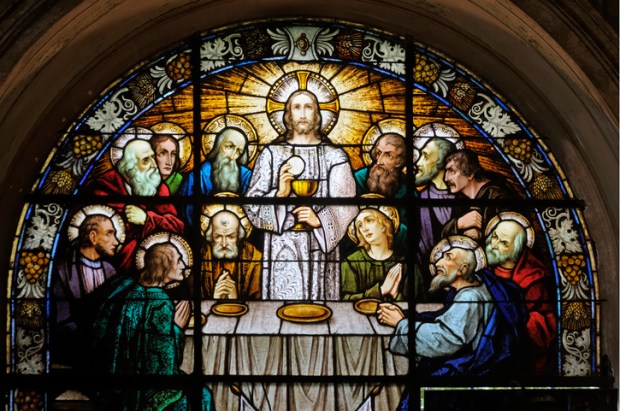
Perhaps the Greens should simply amend the existing words, rather than doing away with them all together:
‘Our Mother, which art on Earth, hallowed be thy name.
Thy Climate change.
Thy air be pure on Earth, as it is no longer in the atmosphere.
Give us this day our daily renewables.
And forgive us our carbon, as we tax those that emit carbon against us.
And lead us not into shale gas, but deliver us from fossil fuels.
For thine is the Earth Hour, the Wind Power, and the Solar.
For Gaia and ever. Amen.’
Got something to add? Join the discussion and comment below.
You might disagree with half of it, but you’ll enjoy reading all of it. Try your first month for free, then just $2 a week for the remainder of your first year.