 In 1984, the GOP experienced the single greatest presidential electoral result with 525 electoral votes and 49 states voting for Ronald Regan’s second term. Despite an enormous presidential endorsement, one unlikely to be seen again, the same support was not translated to Congress. In terms of governance success and ability to legislate Trump’s 2016 306 electoral college win whilst retaining Senate and House majorities is arguably a bigger win for the GOP. A Republican majority at all levels of government has not been achieved since 1928. The Democrats on the other hand enjoyed a whitewash as recently as 2008 with Barrack Obama’s historic win. There is no doubt that Donald J Trump is one of the most controversial candidates for President of the United States. There was condemnation of his candidacy, there was scorn over is electability and there was a common fear he was sending the Republican Party into an era in the electoral wilderness. Academics, pollsters, political experts, commentators and celebrities were all proven incorrect. Why was the academic and political elite so removed in this election? How did Donald Trump sneak through to the presidency? These are questions that are being analysed and diagnosed across politics. The reality is he was blunt, real and able to connect to a disaffected majority that is removed from traditional political elitism.
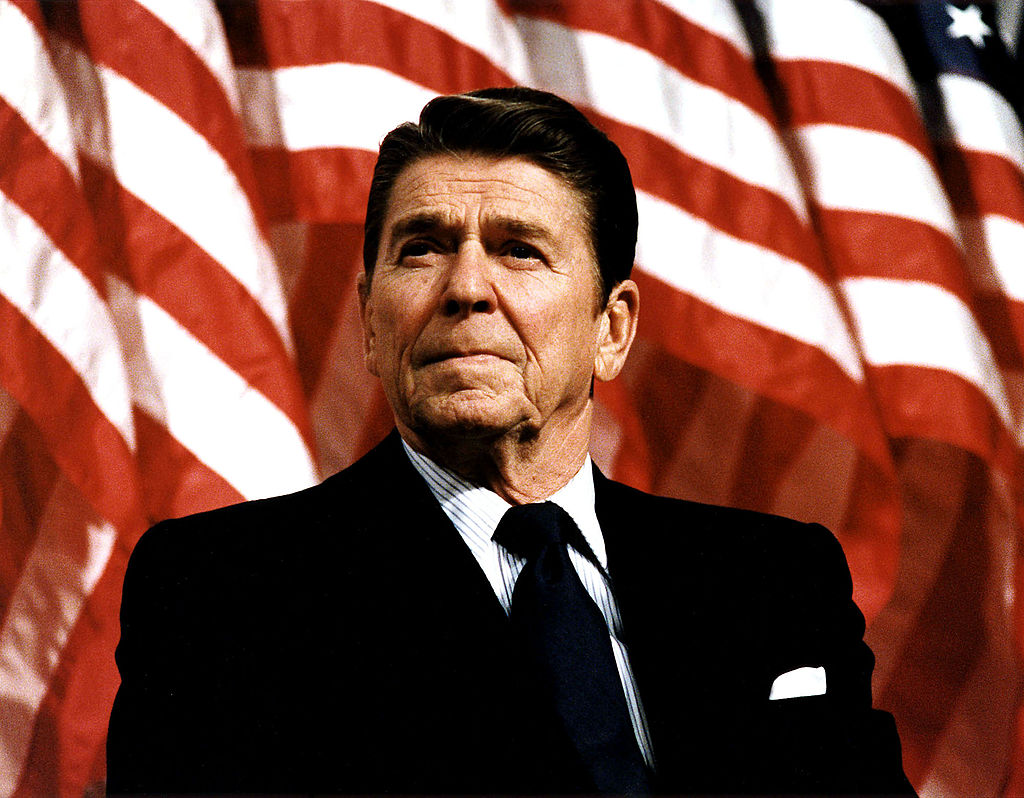
For over a quarter century Ronald Regan was a leading figure in American politics and the feature of the GOP’s success and realignment. He is described for his deep convictions, political skills and star power. When Reagan first ran for the GOP nomination he lost. It was not until November of 1979 that he declared his nomination to be the GOP’s candidate for the 1980 election. Many in the establishment thought he was too conservative and perhaps too old to win. He was a candidate in a field of seven. None of the other six had Reagan’s stature, communication ability or star power. Having been a successful actor he outperformed his opponents. George H. W. Bush was the candidate with better political experience and started strongly winning the Iowa primary. Bush was better organized as an established candidate. Reagan however was the conservative champion, representing part of the GOP that was the silent majority. Moderate Republicans were terrified Reagan would be too confrontational against the Soviets. Bush called Reagan’s fiscal policy ‘voodoo economics’. Reagan’s family, most notable his wife Nancy, identified that Reagan was at his best when the voters saw him in person, when he connected with them and had a chance to speak to them. The defining change in his campaign for the nomination was in the second debate when the microphones were ordered to be turned off he quipped “I paid for this microphone” this caused him to soar in the polls winning 29 of the 33 primaries he and Bush competed in. Despite all the criticisms off Reagan’s outsider, non-establishment status, the fear that he would cause conflict with the Soviets or crash the American economy, what the American people instead found was a Washington outsider, a Hollywood actor who left one of the greatest political legacies the United States have ever seen.
Entering the GOP primary field in June 2015, Trump entered a field dominated by the elite of the Republican Primary including Jeb Bush, the darling of the traditional Republican elite. Trump was immediately criticized from within the establishment, and outside it, for his inexperience in politics, his political views and his controversial commentary. The GOP field was both broad and deep with governors, senators and notable political figures vying for the nomination. Going into Iowa, Trump is defeated by GOP conformist Ted Cruz. Trump’s family, his core campaign team identify that Trump is successful when he gets out and talks to the voters, he connects with them, he has a blunt and fearless conversation with him. Trump’s debate performance have a flair for the theatrics reminiscent of his days as the star of his reality program, The Apprentice. He out-performs his rivals dominating the attention. Trump wins 41 out of 50 of the primaries he contests receiving a record 1441 delegates for the nomination. Trump continues his non-establishment campaign focusing on talking to voters about a simple message “making America great again” and putting Americans first. Donald J Trump wins the 2016 Presidential election, upsetting the establishment who were certain of a Clinton victory.
This election has seen voter turnout for both the Democrats and Republicans decreased. The Democrats bled more votes across key states costing them the White House. However, there are only 13 Presidents that can claim a bigger electoral college vote then Trump. 31 Presidents have received a lower electoral college than Trump’s 306. In 1960, a revered figure in American politics was elected. A president who today is still referenced for his powerful speeches and legacy left by his service. President John F. Kennedy was elected with 303 electoral college votes, less than what was achieved by Trump. The result has come as a shock to most of the world. It was unexpected. Many are vocally critical of what the American voters have done. However, a simple feature of the democratic principles that we as a western democracy hold dear is that the voters are always right. You may not agree with their decision, you can question what led them to the vote they made, but you cannot ignore the majority, silent or otherwise. This electoral result is a clear message that the majority of Americans, in a majority of states, are not happy with the direction of the current government, or the vision that Hillary had for their country. The dissatisfaction is high, there is conflict between socio-economic classes, minority groups and recently the racial tension within the United States has been at a level not seen since the civil rights movement. Americans have voted for a message of making the country great again. This has resonated in a country that is considered the most powerful nation on earth.
For the result to have been different, for Hillary Clinton to have been elected, all that had to happen was for 1 person in every 100 had to vote for Clinton instead of Trump. In all of the scorn of why Trump was a terrible choice it is important to remember that this voting public, condemned as racist, sexist and essentially red-necks, is the same public who four and eight years ago elected the first African-American president, Barrack Obama. Clinton didn’t lose because she was a woman or a Democrat or a political elite, she lost because the majority of voters didn’t connect with her, didn’t trust her and were unwilling to risk voting for her.
There has been extensive scorn of Trump’s comments on women. There is no question that they were atrocious but some 40 percent of women voted for him. Politicians are always criticized for being all talk and no action. Trump’s words do not match his actions. His words, vulgar, crude and disrespectful do not match his actions of appointing numerous female executives to key positions within his corporation. He preferences one of his daughters over his sons as his second in command. These are not the actions of a misogynist. Many will disagree that his comments are enough to condemn him. There are many absolutes being cast as to why Trump can’t be the president. The simple reality is the American public have voted for a candidate whose faults are known. The worst of him has been seen; he is a known entity. There are no unanswered questions hanging over his head regarding his conduct. The electorate has endorsed a candidate who is flawed, but whose flaws are on full display out in the open. This is a big statement from the public about what they want from politicians.
There has been a lot of emphasis placed upon the importance of having a female President. I have no doubt that this will happen, but that women must be better than the candidate she is competing against. That woman must inspire the majority of voters in a majority of States to get out and vote for her. The greatest politicians are those who have achieved something not achieved before (Kennedy as a Catholic, Obama as an African American, FDR struggling with disability). Clinton relied on the legacy of her husband, the Obama administration, her political elite status and her gender to win the White House. Her campaign was shallow, uninspiring and lacklustre. She used celebrity endorsements and approaches as props, the entire campaign was staged. This was a stark contrast to the Trump family focused simple yet effective get out and connect with voter’s campaign. Clinton extensively fundraised for a very flashy campaign. Trump kept it very simple. His constant was a cap with his campaign slogan. He had continuous high turnout at all rallies and spent his time engaging with voters. There was limited fundraising and very limited television advertising. The legacy of Obama’s high expense, high fundraising focused campaign as the new model in campaign politics has been questioned. Trump has proved a simple campaign focusing on connecting with voters is still the most effective means of campaigning. His social media was simple and effective, his message cut through and his flare was demonstrated with #draintheswamp.
Trump’s campaign was not one of fear. It was one focused on American’s needs must come first. He cemented his position with an overlooked coalition of mostly blue-collar, white and working-class voters. He connected with the feeling that after decades of multiculturalism and globalization had resulted in a slip of America’s prosperity. Trump was their champion for a better future and a better America. This is an absolute rejection of the Obama administration and its policy agenda. This is the political death of a dynasty that has dominated Democratic politics for a quarter century. The electoral machine of Obama could not elect Clinton, her strategists, aids and democratic hierarchy thought they had the set up to ensure generations of Republican wilderness. Tuesday night began with commentators claiming Trump has no mathematical path to the nomination. This was proved incorrect almost immediately with Trump taking an early lead in Michigan, Florida and North Carolina, which kept him improving throughout the night.
The upper Great Lakes won this for Trump. Michigan, Ohio, Pennsylvania and Wisconsin are conservative states. The have continuously re-elected Republican governors (with the exception of Pennsylvania in 2014). The Michigan primary saw more Republicans turnout to vote then Democrats. How is Trump scoring in Michigan and Wisconsin when Paul Ryan, running for Vice-President with Romney, couldn’t deliver his home state, and despite repeated efforts by Bush, Michigan was always just unachievable?
The answer is simply NAFTA. This trade agreement heavily criticized by Trump as anti-American cost the rustbelt thousands of manufacturing jobs. These four states, which rely on heavily industrial jobs have been really hurt by the free-trade agreements of the Obama/Clinton administration. As Secretary of State she oversaw the agreements that have cost these voters their jobs. Trump’s anti-free trade rhetoric, despite receiving the scorn of the international community impressed rust belt voters. A 35 percent tariff on Mexican-built cars protects American manufacturing, foreshadowing American built iPhones all worked to impress the rustbelt about making their future great again. America is built on the American dream of working hard and achieving success, but where politicians have undermined that by making it easier for American corporations to make money outside of America at the expense of American workers it is hardly surprising that someone promising to protect their jobs is going to get their vote.
There was extensive criticism of Trump’s proposal to build a wall to prevent illegal border crossings from Mexico. This was laughed at, ridiculed and condemned as racist. As an Australian, I viewed it as a policy of border security. It sparked recognition of “we will decide who comes to this country and the manner in which they come”. Given the electoral success the Coalition received on a strong border security platform, is anyone in Australia really surprised that a similar policy is effective elsewhere? The illegal entries into the United States have an almost incalculable effect on the American government in terms of on-going cost. It is a big problem that requires government attention, is it racist for a politician to want oversight on the immigration of their country or is it prudent politics? The Brexit vote in the UK nodded to this problem. The EU is a failed experiment on open borders. In an era of terrorism and issues of national security, where there has never been more fear in the community regarding violence, a strong stance on controlling immigration is going to have an impact. After a year of high profile attacks in major European cities and increased gun violence across the United States, a law and order candidate was always going to poll strongly. The GOP is already the traditional party for this, Trump just capitalized on it and the voters responded strongly.
Surprising to most, Trump’s first act as the president-elect was to call for unity, to call for a united America. He didn’t claim success personally, but as a collective effort of all of his supporters, of all American’s who voted for him. He has been continuously underestimated as a candidate and written off as unelectable. His successes were missed by pollsters, commentators and the political elite. He was the champion of the downtrodden who largely felt they lacked success and prosperity. His campaign after party was full of supporters who explain how Trump spoke to the forgotten people. Menzies Australian legacy was founded on his connection with the forgotten people. Trump’s path to success is similar to what we have seen before. His campaign strategy was consistent with other outsider campaigns, and his engagement was simple: connect with those who feel neglected by the establishment.
The realignment the GOP felt imperative to winning back the White House has occurred, it’s just not what the internal elite thought it had to be. The Democratic reform will come, that party will have to evaluate how eight years have changed their fortunes so dramatically. Trump’s victory did not surprise me, the social media melt down did not surprise me, the attitude that Trump could bring down the American political system did surprise me. American politics has endured through civil wars, incredibly divisive political movements, terror attacks and Presidential scandals. America will endure. Democracy will endure and the sun will rise tomorrow.
Gemma Whiting is a consultant, a former Abbott and Turnbull government staffer and a Uni-Capitol Washington Internship Program participant that saw her work with a a United States Senator